


Your shopping cart is empty!
Garden Angelica (Wild Celery, Norwegian Angelica)
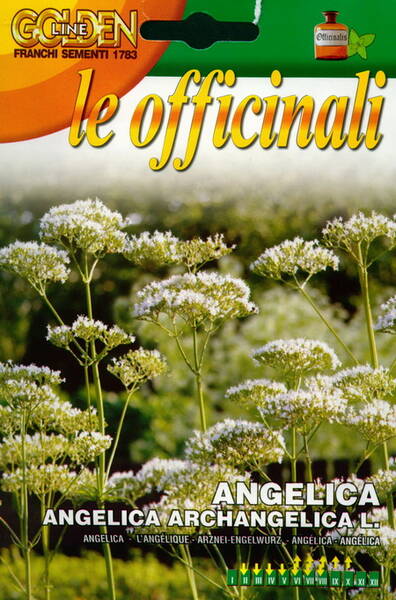

Archangelica officinalis Hoffm.
3.28€
Ex Tax: 2.65€
Ex Tax: 2.65€
Garden Angelica - Angelica archangelica L. = Archangelica officinalis Hoffm.
Family: Umbelliferae.
Origin: Greenland, Northern and Eastern Europe to Central Asia.
Special Features: Majestic flowering plant with aromatic and medicinal uses.
Colour: Greenish white to creamy white.
Natural Flowering Period: June - August.
Winter Hardiness Zone: Z4.
Growth Habit: Upright and statuesque.
Foliage: Long exotic-looking leaves unfold in the spring.
Height with Flowers: 180 - 250 cm.
Spacing between Plants: 75 cm.
Soil Requirements: Evenly moist soils, pH 5.8 - 6.8.
Location: Full sun.
Use: Plant together with other bold plants suited for moist soils: Eupatorium fistulosum, Euphorbia palustris and Vernonia noveboracensis.
Specialities: Early spring shoots have been used as a natural sweetener.
Germination: the sowing must be kept warm (about +18 to 22°C) and moist for the first 2-4 weeks. After this period the sowing must be kept at a cold temperature (between -4 and +4°C) for another 4-6 weeks. It is not so important if the temperature is higher or lower during the cooling period, but the cooling period has to be prolonged because the synthesis of the germination inducer, hormonlike acid, slows down or comes to a standstill. It is beneficial to cover the sowing with snow during the cooling-period. The temperature below it usually keeps in the optimum range of -4 to 0°C . The sowing is kept moist, and the melting snow helps to destroy the shell, which is advantageous for the germinating seedling. After this cooling-period the sowing may not be immediately exposed to high temperatures. The most effective temperatures are between +5 to 12°C , even if germination has started. The best location for this sowing, even in March, April and May, is the open field, the cold frame or a cold greenhouse.
Family: Umbelliferae.
Origin: Greenland, Northern and Eastern Europe to Central Asia.
Special Features: Majestic flowering plant with aromatic and medicinal uses.
Colour: Greenish white to creamy white.
Natural Flowering Period: June - August.
Winter Hardiness Zone: Z4.
Growth Habit: Upright and statuesque.
Foliage: Long exotic-looking leaves unfold in the spring.
Height with Flowers: 180 - 250 cm.
Spacing between Plants: 75 cm.
Soil Requirements: Evenly moist soils, pH 5.8 - 6.8.
Location: Full sun.
Use: Plant together with other bold plants suited for moist soils: Eupatorium fistulosum, Euphorbia palustris and Vernonia noveboracensis.
Specialities: Early spring shoots have been used as a natural sweetener.
Germination: the sowing must be kept warm (about +18 to 22°C) and moist for the first 2-4 weeks. After this period the sowing must be kept at a cold temperature (between -4 and +4°C) for another 4-6 weeks. It is not so important if the temperature is higher or lower during the cooling period, but the cooling period has to be prolonged because the synthesis of the germination inducer, hormonlike acid, slows down or comes to a standstill. It is beneficial to cover the sowing with snow during the cooling-period. The temperature below it usually keeps in the optimum range of -4 to 0°C . The sowing is kept moist, and the melting snow helps to destroy the shell, which is advantageous for the germinating seedling. After this cooling-period the sowing may not be immediately exposed to high temperatures. The most effective temperatures are between +5 to 12°C , even if germination has started. The best location for this sowing, even in March, April and May, is the open field, the cold frame or a cold greenhouse.
Eng.: Angelica, archangel, European angelica, garden angelica, masterwort, root of the holy ghost, wild celery, wild parsnip.
Bot.syn.: Angelica litoralis Fr., Angelica officinalis Moench, Archangelica litoralis (Fr.) C. Agardh, Archangelica officinalis (Moench).
Garden Angelica (Wild Celery, Norwegian Angelica) - Angelica archangelica L. = Archangelica officinalis Hoffm.
Folk names: Holy Ghost, wild parsnip, angel's herb.
It grows in the forest zone and steppe zone (less often in the tundra) along the banks of rivers, lakes, and ditches, in water meadows, floodplain forests, and on the edges of swamps.
In places, it forms significant thickets. Prefers habitats with high humidity and rich soils with a slightly acidic or neutral reaction.
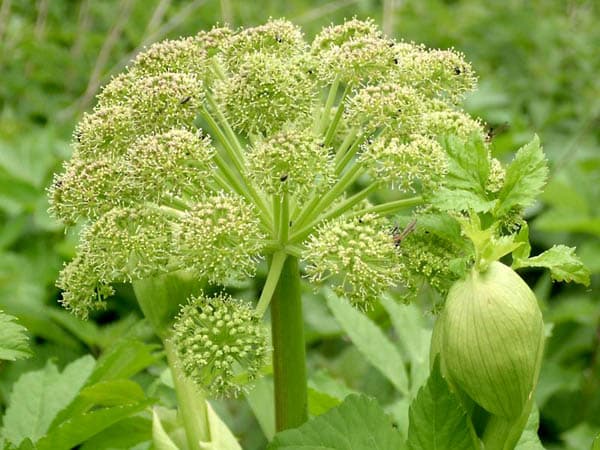
Monocarpic (biennial and perennial) with a thick root containing milky juice. Stems are thick, hollow, up to 250 cm high. Leaves are large, sometimes up to 80 cm long, usually tripinnate with ovate, sharp-toothed segments along the edge. Rosette and lower stem leaves have long petioles, upper ones are sessile, with strongly swollen sheaths. Umbels are almost spherical, 8-15 cm in diameter, with 20-40 rays.
Blooms in July. Propagated by seeds. In the first year of life, it forms a rosette, blooms in the second or third year.
Location: plant or sow on a damp or swampy bank, choosing a sunny place.
Care: seedlings are thinned out, taking into account the size of the plant. Umbels with fruits are cut off, as they tend to self-seed.
Reproduction: seeds (sowing before winter).
Use: in single plantings on the banks of large and medium-sized reservoirs, in group plantings among similarly massive neighbors.
Apple sauce with raisins and angelica.
Wash and chop the angelica rhizomes well. Wash apples and raisins. Put peeled and chopped onions, angelica, and apples together with raisins and sugar in a large saucepan, add water, bring to a boil, and cook over low heat, stirring often, to the consistency of thick porridge. Add salt, cloves, pepper, vinegar, and cook for another 10-20 minutes. Put the sauce in jars and close with screw caps.
Sour apples - 1 kg, fresh angelica roots - 500 g, onion - 500 g, raisins (seedless) - 5 tbsp., sugar - 500 g, water - 0.5 cups, salt (coarse) - 0.5 tsp., ground cloves - 1 pinch, ground black pepper - 1 pinch, ground red pepper - 0.5 tsp., apple cider vinegar (5%) - 1.5 cups.
Borsch with angelica.
Put shredded fresh cabbage into boiling water.
Cut beetroot into strips and stew. Fry carrots, onions, parsley, and angelica stems (peeled and cut into thin rings) in oil with tomato sauce. Add all this to the cabbage and cook until tender. Then season with vinegar, add salt, sugar, and bring to a boil. Before serving, add sour cream.
Angelica stems - 200 g, beetroot - 120 g, cabbage - 100 g, carrots - 80 g, onion - 80 g, parsley - 20 g, tomato paste - 60 g, vegetable oil - 20 g, vinegar (6%) - 30 g, sugar - 10 g, sour cream - 40 g, water - 0.8 L, ground black pepper and salt - to taste.
Potato soup with angelica root.
Put a piece of angelica and groats into boiling water, cook for 10 minutes. Then add diced potatoes and cook for another 5 minutes, add finely chopped onions and cook until potatoes are done. Season with butter and salt to taste. Remove the angelica root when serving.
Angelica root - 10 g, potatoes - 2-3 pieces, green onions - 0.5 cups, rolled oats (or buckwheat groats) - 3 tbsp., water - 1 L, butter - 1 tbsp.
Cold tomato soup with angelica.
Scald tomatoes with boiling water, peel, and chop. Wash, peel, and chop the angelica. Put all ingredients in a blender, pour in chilled water, and beat into a homogeneous mass. If the soup seems too thick, you can add a little water. Season, sprinkle with chopped parsley, and drizzle with oil.
Tomatoes - 6 pieces, young angelica shoots - 1 cup, vinegar (6%) - 1 tsp., sugar - 0.5 tsp., boiled water - 1 cup, vegetable oil - 2 tbsp., parsley greens - 1 tsp., ground black pepper and salt - to taste.
Fried potatoes with angelica.
Wash, peel, and cut potatoes into strips. Boil angelica flower buds for five minutes in salted water, drain the water, rinse the angelica with cold water, and chop finely. Add angelica to the potatoes and fry in sunflower oil until tender. Serve with sour cream.
Potatoes - 300 g, angelica flower buds - 200 g, vegetable oil - 2 tbsp., sour cream and salt - to taste.
Meatballs from boiled sausage with angelica.
Finely chop the sausage, soak the bread in water or milk. Beat in eggs, add finely chopped angelica and flour, season with salt and pepper, form the mass into balls the size of a walnut, and cook in boiling salted water until they float. Remove with a slotted spoon and serve with boiled potatoes and fried onions.
Boiled sausage (bologna) - 300 g, white bread - 3-4 slices, flour - 3 tbsp., butter - 1 tbsp., onion - 1 pc., angelica leaves - 0.5 cups, ground black pepper and salt - to taste.
Rhubarb and angelica jelly.
Combine peeled rhubarb, angelica, water, and sugar in a saucepan and cook for about 25 minutes until the rhubarb falls apart. Remove from heat and add vanilla. Mix starch with 6 tablespoons of water and mix it thoroughly with the rhubarb. Return the jelly to the heat and, stirring constantly, boil it for about 5 minutes until the mixture thickens.
Divide into separate serving bowls and cool in the refrigerator. Serve with whipped cream or sour cream.
Rhubarb - 700 g, water - 400 ml, sugar - 100 g, angelica leaves (finely chopped) - 3 tbsp., corn starch - 3 tbsp., vanillin - to taste.
Candied angelica.
Dip unblown flower buds and young shoots, freed from the skin, into hot thick (70-80%) sugar syrup. Cook for 10-20 minutes. Having removed from the syrup, dry at room temperature.
Candied angelica stalks.
Cut fresh green stalks or stems into 2-3 cm pieces, put in a glass dish, pour slightly salted boiling water, and soak for 24 hours. Drain the water.
Peel the stalks and rinse in running water. Prepare syrup. Throw angelica into boiling syrup. Cook for 20 minutes, cool, remove, and dry for 3-4 days, then sprinkle with sugar and store in a tightly closed jar. Use the remaining syrup to flavor cocktails, wine, or liqueurs.
Young angelica leaf stalks - as much as available.
Proportion for syrup: sugar - 1 cup, water - 600 ml.
Aromatic cake.
Grind egg yolks with sugar, add flour, nuts, and spices. Beat whites into a stiff foam and mix with the dough. Spread the resulting mass on waffles or cookies and brown in the oven at a temperature of +150+200 °C.
Egg - 4 pcs., sugar - 250 g, almonds (or ground nuts) - 200 g, flour - 4 tbsp., angelica root (ground) - 20 g, cinnamon - 2 g, candied orange peel - 20 g, waffles without filling (or dry cookies).
Angelica root tea.
Finish drying air-dried angelica roots in an oven or stove. Roast dry roots until they acquire a dark brown color, then crush in a mortar or grind in a coffee grinder. Brew like tea.
Angelica root kvass.
Put pieces of fresh angelica root in a dark plastic bottle with a capacity of more than 2 liters, add sugar, washed raisins, pour boiled water, screw the cap, and place in a warm place for fermentation, shaking the bottle several times during the day.
After 3-4 days, when the gas formation process intensifies, very carefully unscrew the cap, releasing part of the formed gas, then place the bottle in a warm place again.
The drink will be ready for consumption in 8-9 days. Store the bottle with ready kvass in the refrigerator.
The resulting kvass is useful as a tonic drink for the cardiovascular system, for cleansing the gastrointestinal tract, for eliminating constipation, and in the treatment of insomnia, flatulence, and pancreatitis. According to traditional medicine, this kvass is useful for unpleasant manifestations of menopause and in the treatment of many female diseases.
Fresh angelica root - 20 g, sugar - 1 tbsp., raisins - a few pieces, water - 2 L.
Angelica root powder.
First, dry the washed roots at room temperature, then in an oven or electric dryer, after that grind into powder and sift.
Use for making sauces, as a seasoning for meat, add to dough. Also used for brewing tea, as well as for flavoring drinks and other products.
Salting angelica roots.
Wash the roots well, add fresh leaves to them, pass everything through a meat grinder, and put in glass jars, sprinkling each layer with salt at the rate of 60 g of salt per 1 kg of the mixture.
Close the jars with polyethylene lids and store in a cool place. Salted angelica roots are used as a seasoning for meat and vegetable dishes.
Pickled angelica.
Sort and wash the angelica greens, cut into pieces 2-4 cm long, pack tightly into sterilized glass jars, and pour over with a hot solution of salt and vinegar.
Cover the jars with lids and pasteurize in boiling water: 0.5-liter jars - 15 minutes, liter jars - 20 minutes.
Per 1 L of solution: salt - 30-40 g, vinegar (6%) - 20 g.
Apples pickled with angelica.
Wash and chop the angelica rhizomes well. Wash the apples, cut into halves, and remove the core. To prepare the marinade, mix sugar with water and spices, put on fire, and bring to a boil. Remove from heat and add vinegar.
Place apples and angelica in jars, pour over with marinade, and heat the jars in boiling water: liter jars - 5 minutes, three-liter jars - 25-30 minutes (the contents should not boil). After that, seal the jars for storage.
Apples - 1.5 kg, fresh angelica roots - 500 g.
Per 1 L of marinade: cooled boiled water - 3 cups, sugar - 2 tbsp., coarse salt - 1 tbsp., vinegar (9%) - 1.5 cups, allspice - 6-7 peas, cloves - 6-7 buds, cinnamon - a small piece.
Apple jam with angelica.
Boil washed and chopped angelica roots in sugar syrup for 30 minutes. After that, add small apples together with the stalks and cook until tender.
Apples - 3 kg, angelica roots - 300 g, sugar syrup (70%) - 3 liters.
Angelica in cream.
Peel young, not toughened angelica stems, cut into pieces, pour fresh cream over them, and cook for 15-20 minutes. Salt and serve hot. Cream can be replaced with double the volume of milk.
Angelica stems - 200 g, cream (20%) - 100 ml, salt - to taste.
Angelica salad.
Wash young angelica leaves, boil in salted water, drain in a colander, and cool. Prepare a sauce from sour cream, vinegar (or lemon juice), salt, pepper, and add grated cheese. Pour the sauce over the boiled leaves and mix.
Angelica leaves - 500 g, sour cream - 2 tbsp., table vinegar (or lemon juice) - 1 tbsp., grated cheese - 2 tbsp., ground black pepper and salt - to taste.
Angelica salad with apples and celery.
Cut angelica, apples, and celery into thin strips, mix, and season with spices and sour cream. Sprinkle with chopped dill on top. Instead of vinegar and sour cream, you can season with mayonnaise and sprinkle with walnuts.
Young angelica shoots, peeled - 120 g, apples - 80 g, celery root - 80 g, vinegar, spices, and salt - to taste.
Cauliflower salad with angelica and carrots.
Wash cauliflower, scald with boiling water, chop finely, combine with grated carrots, peeled and thinly sliced angelica shoots, add salt and pepper, put in a salad bowl, and season with a mixture of vegetable oil and lemon juice. Sprinkle the salad with herbs.
Cauliflower - 200 g, young angelica shoots - 0.5 cups, carrot - 1 pc., parsley greens (or dill) - 1 tbsp., lemon juice - 2 tbsp., vegetable oil, salt, and ground black pepper - to taste.
Fried flower buds of forest angelica.
Boil flower buds in salted water, drain the water, fry in butter. Separately fry breadcrumbs without oil until golden brown and mix with angelica. Can be served as a side dish for meat.
Angelica flower buds - 100 g, butter - 1 tbsp., breadcrumbs - 2 tbsp., salt - to taste.
Butter with angelica.
Mix all ingredients thoroughly, put in a narrow long mold, freeze, and cut into slices. Serve ready slices with fish, meat, hot potatoes, boiled or baked vegetables.
Butter at room temperature (soft) - 0.5 cups, angelica leaves (finely chopped) - 1 tbsp., lemon zest - 0.5 tsp., crushed garlic - 1 tsp., white pepper - to taste.
Classic English angelica liqueur.
Infuse all herbs and seeds in vodka for 2 weeks in a dark warm place, shaking daily, then filter. Add sugar syrup and, if desired, yellow food coloring. You can add 1-2 saffron stigmas during infusion to obtain a yellow color of the liqueur. After straining, the liqueur should stand for at least another month.
Dry chopped angelica root - 3 tbsp., chopped almonds (or apricot kernels; better to add 2-3 bitter ones) - 1 tbsp., crushed allspice - 2-3 peas, cinnamon (coarsely ground) - 1 stick, anise or fennel seeds (crushed) - 3-6 pcs., coriander seed powder - 1/8 tsp., oregano leaves (fresh) - 1 tbsp. (or 1 tsp. dry), vodka - 1.5 cups, standard sugar syrup (1:1) - 0.5 cups.
Angelica tincture with lavender on alcohol.
Infuse lavender flowers and angelica root in pure alcohol for three weeks, strain, add sugar to water to taste (no more than 10 g), and dilute the infusion with water to 1 liter.
Lavender (flowers) - 1 pinch, angelica (dried root) - 7 g, alcohol - 0.5 L.
Aromatic moonshine on angelica root.
Pour moonshine over angelica, cinnamon, cardamom, and lemon peel. Let it brew for 4 days and distill.
Dried angelica root - 10 g, cinnamon - 10 g, cardamom - 10 g, lemon peel - 5 g, double-distilled moonshine - 1.8 L.